
 English


Views: 0 Author: Site Editor Publish Time: 2025-12-06 Origin: Site


Abnormal noise from a tower crane's slewing bearing can be more than a small concern. It often signals early failure and rising safety risks. These sounds may also lead to costly downtime if ignored. In this post, you'll learn the main causes of slewing bearing noise, how to diagnose them, and practical steps to prevent damage.
Defects formed during forging or rolling can weaken the raceway, and they often expand under load. As rolling elements pass over these crushed zones, they create sharp cracking noises that grow louder over time. It can also increase stress in nearby areas, leading to long-term structural instability and faster bearing fatigue.
Small pits or ulcers on rolling elements interrupt smooth rotation, and they generate noise as the balls or rollers strike damaged points. These sounds often appear early, long before a full seizure occurs. They may also indicate poor lubrication, rising friction, or advancing fatigue failure inside the slewing bearing.
Spacer blocks may deform when materials vary in quality or when heat treatment fails. Once the block tilts or flips, rolling elements can jam inside the raceway, and the crane operator may hear intermittent knocking. It happens as damaged spacers repeatedly disrupt the travel path of the balls or rollers.
Unfinished plug edges and loose taper pins create friction points that produce steady, periodic noise. Steel balls hit these rough edges as they circulate, and the sound becomes more noticeable under slow rotation. It often acts as an early indicator of improper machining or assembly alignment.
A mounting surface that is not flat can distort the raceway during tightening. It forces the bearing to work under uneven load, increasing driving force and twisting the structure. Cracking sounds may appear as misaligned joints shift under stress, and this type of deformation can become one of the most severe failure modes.
Dust contamination, aging grease, or a thin oil film can all trigger noise. Operators may detect dust sounds, scar sounds, or irregular friction types depending on the condition of the lubricant. Incorrect grease selection accelerates wear, and it increases vibration as metal surfaces begin to rub directly.
Some noise does not come from the slewing bearing itself. Motors can buzz when axial vibration rises, and the frame may enter resonance under certain load conditions. These secondary noises can mislead operators, so identifying whether the host machine or the bearing produces the sound is essential.
Noise Source | Typical Sound Pattern | Possible Indicators |
Raceway defects | Sharp cracking | Crushed areas, load expansion |
Rolling element pits | Rhythmic ticking | Lubrication loss, fatigue |
Spacer issues | Intermittent knocking | Spacer tilt or turnover |
Plug/pin defects | Continuous periodic sound | Rough machining, loose pins |
Installation errors | Loud cracking | Distortion, misalignment |
Lubrication faults | Irregular friction | Dust, aging grease |
Host machine noise | Buzzing or resonance | Motor vibration, frame issues |
A diagnostic approach helps technicians pinpoint where the noise begins and how it behaves under load. Abnormal sounds often change as the crane rotates, and they can reveal early bearing or assembly issues. Understanding these patterns allows teams to take action before severe failure appears.
Raceway defects usually create sharp cracking, and the sound becomes louder as rolling elements pass crushed areas. When forging or rolling introduces weak points, they expand during operation, and it becomes easy to hear sudden impacts under rotation. These defects may also distort nearby surfaces, increasing stress and raising long-term risk.
Pitted balls or rollers interrupt smooth movement, and they create rhythmic noise at each rotation. It often appears as a clear warning before seizure, and it signals surface fatigue or lubricant failure. When technicians hear repeated ticks, they should inspect the rolling elements for early-stage wear.
Deformed spacers can shift or flip, and the rolling elements may jam inside the raceway. This issue produces an irregular knocking sound, especially under low-speed rotation. Material quality differences or poor heat treatment make spacers more likely to deform, and it becomes a common source of noise during crane operation.
Rough plug edges and loose taper pins generate steady, periodic noise. Balls strike these imperfect surfaces, and the resulting sound becomes consistent, especially under slow slewing. It helps technicians identify machining or tightening errors quickly because the noise repeats at fixed intervals.
A non-flat mounting surface bends the raceway, and the structure may twist under load. This deformation increases driving force, and it produces loud cracking as misaligned joints shift. The bearing becomes more sensitive to stress, and this condition represents one of the most dangerous failure modes during crane operation.
Lubrication problems can produce several noise types, and each sound helps diagnose the cause. Dust inside the grease may create soft, irregular vibration, while scars on the raceway lead to stronger, more rhythmic sounds. Thin or aging grease increases friction, and incorrect lubricant selection accelerates noise growth as metal surfaces begin to contact directly.
Not all noise begins inside the slewing bearing, and motors can buzz when axial vibration rises. Frames may resonate, creating secondary sounds that mimic bearing issues. It is important to separate host noise from true bearing faults because both may appear during the same slewing motion.
Noise Type | Likely Source | Diagnostic Clue |
Sharp cracking | Raceway defects | Noise increases under load |
Rhythmic ticking | Pitted rolling elements | Repeats each rotation |
Intermittent knocking | Spacer deformation | Irregular pulse patterns |
Periodic humming | Plug or pin issues | Constant interval sound |
Loud cracking | Installation distortion | Stress noise during slewing |
Irregular friction | Lubrication faults | Dust or aging grease |
Buzzing / resonance | Host machine | Axial vibration or frame flex |
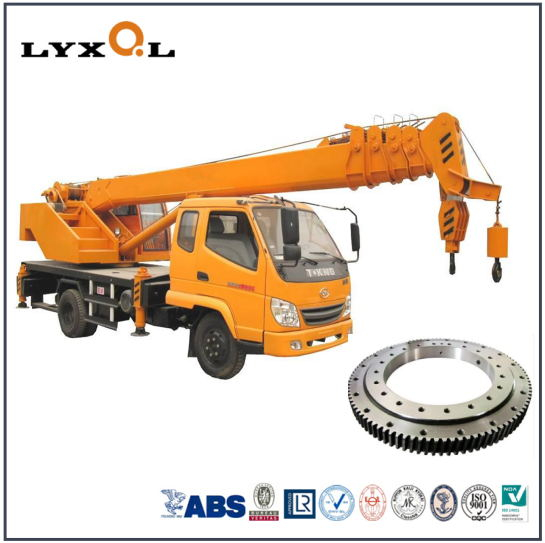
Noise in a tower crane’s slewing bearing often begins long before the crane is installed or placed under load. Many issues form during material selection, machining, heat treatment, or final assembly. When any of these elements deviate from required tolerances, the bearing becomes more sensitive to stress, vibration, and structural deformation, and the result is abnormal sound during operation.
Material defects can appear early if steel is not processed under controlled conditions, and these defects may weaken the raceway. When heat treatment is inconsistent, hardness varies across the bearing, and it causes uneven wear as rolling elements travel through the raceway. The bearing may also develop micro-cracks, and they expand when loads increase. Operators often hear cracking or popping because the damaged surface no longer supports the rolling elements smoothly.
The raceway must maintain tight geometric tolerances, and small variations can produce strong noise under load. When the surface is rough or uneven, rolling elements strike high points and create vibration. It becomes more noticeable at low speeds because rotation magnifies each surface imperfection. If geometry drifts from design standards, the bearing distributes forces incorrectly, and the noise pattern may shift from soft vibration to heavy clicking.
Every spacer, plug, and pin inside the slewing bearing depends on precise dimensions, and even minor errors can disrupt the internal load path. A spacer made from poor material can deform, and it may flip when pressure rises. Once the rolling elements hit this shifted block, the sound becomes irregular and sharp. Loose taper pins or poorly machined plug edges also generate periodic noise, and technicians often hear repeated tapping as balls move past these high-friction points.
The gear ring must follow strict design and strength requirements, often guided by ISO 6336 calculations for bending and contact stress. When the ring does not meet these values, it may deform or wear prematurely, and the mesh clearance between the pinion and ring gear becomes unstable. High spots in the pitch circle may cause loud impact sounds as the gears rotate. If the clearance is too small or uneven, it may also introduce vibration that echoes through the slewing bearing structure.
Noise in a tower crane’s slewing ring often starts during installation. If the mounting base, bolts, or gear mesh deviate from required conditions, the bearing experiences uneven stress. These early errors become louder during rotation, and they may accelerate structural damage.
A slewing bearing depends on a flat and aligned mounting surface, and even small distortions can bend the raceway. When the ring is tightened onto an uneven platform, it twists slightly, and rolling elements strike high-stress zones. This produces loud cracking as the crane slews, and the noise grows when the load shifts. It also increases the driving force needed for rotation, and the bearing becomes more sensitive to failure.
Bolts must match the required strength rating, and the tightening sequence must follow a cross-pattern to avoid distortion. If bolts stretch or loosen, the joint surface separates under axial load. In one QTZ25 case, groups of bolts failed in succession, and the upper structure detached because the bearing carried load beyond its limit. Loose bolts also create repeated impact noise during slewing because the joint moves each time the load changes.
The pinion and gear ring require proper mesh clearance, and it must be checked again after the bearing bolts are fully tightened. When clearance is too small, the gears hit high points in the pitch circle, and operators hear strong clicking. If clearance becomes too large, backlash increases, and it creates vibration or a knocking pattern. Re-inspection prevents uneven gear wear and ensures the mesh stays stable.
Improper assembly amplifies noise as the bearing ages. Misalignment, bolt relaxation, or poor gear mesh slowly change the load path, and vibration spreads through the crane’s structure. The bearing may deform over time, and noise patterns shift from light friction sounds to heavy impacts during rotation. It becomes clear when the crane operates under wind or sudden directional changes because the structure reacts unpredictably.
Installation Issue | Resulting Condition | Noise Signature |
Uneven mounting base | Raceway distortion | Loud cracking |
Weak or loose bolts | Joint separation | Repeated impact |
Incorrect mesh | Gear collision or backlash | Clicking or knocking |
Poor assembly | Load misdistribution | Vibration under rotation |
A well-designed lubrication strategy protects the slewing bearing from wear, vibration, and early noise formation. Proper grease builds a stable oil film, and it reduces metal-to-metal contact as the crane rotates. When lubrication declines, noise increases quickly, and it often signals rising friction inside the raceway.
Ball slewing bearings typically require grease every 100 operating hours, and roller designs need shorter intervals, often near 50 hours. Roller bearings carry higher line contact stress, and it makes them more sensitive to thin oil films. Dust, moisture, and temperature swings may shorten the cycle further, and technicians adjust intervals when the crane works in harsh environments.
Grease must support heavy loads and resist aging, and a high-viscosity type helps reduce shock during gear engagement. When grease breaks down, rolling elements hit the raceway harder, and operators hear friction or scar-type noise. The right formulation keeps contaminants suspended, and it slows wear inside the bearing. It also improves the damping effect because the oil film absorbs part of the vibration energy.
Grease must be added slowly while the bearing rotates, and this helps the lubricant reach all contact zones. Filling should continue until fresh grease appears at the seal edge. This ensures full oil-film coverage, and it removes old material full of dust or metal particles. If filling stops too early, dry spots form inside the raceway, and it creates localized noise as the balls or rollers pass those areas.
Noise often changes before visible damage appears, and lubrication quality shapes the entire trend. When grease ages, noise rises gradually, and technicians can detect this shift long before a failure. A stable lubrication program keeps vibration patterns predictable, and it helps separate normal operational sound from early warning signals. Monitoring noise after each lubrication cycle also helps confirm whether wear is progressing inside the slewing bearing.
Lubrication Factor | Operational Effect | Noise Pattern Observed |
Long intervals | Thinner oil film | Rising friction noise |
Incorrect grease | Weak load support | Sharp impacts |
Poor filling | Dry raceway spots | Local knocking |
Grease aging | Higher vibration | Irregular friction sounds |
Noise prevention during crane operation requires active monitoring and consistent care. A slewing bearing reacts to load, weather, and working conditions, and each factor may amplify early defects. When teams understand these signals, they can prevent abnormal sounds from growing into structural failures.
Early detection relies on listening for small changes during rotation, and operators often notice light friction sounds before louder impacts appear. A slight increase in vibration may indicate wear inside the raceway, and it becomes more obvious when the crane moves slowly. Regular inspections help teams find loose bolts or uneven lubrication, and these issues are easier to correct when identified early.
Wind can rotate the crane unexpectedly, and strong gusts increase torque on the slewing ring. If the crane cannot rotate freely after shutdown, the wind may force the gear ring into the pinion, and it creates heavy impact noise. Preventing over-rotation protects the gear mesh, and it reduces sudden stress on the bearing. Operators should secure the jib properly and follow safe-wind-operation limits, especially during storms.
When a crane remains idle, the bearing may dry out or collect moisture, and this raises the chance of noise when it restarts. Rotating the slewing ring at intervals keeps grease distributed, and it prevents rolling elements from sticking. Covering exposed parts protects them from dust and corrosion, and it helps maintain smooth operation when the crane returns to service. Idle periods also give teams time to tighten bolts and refresh lubrication.
Dust can enter weak seal points, and it produces friction noise as particles move inside the raceway. Corrosion begins quickly in humid environments, and rusted surfaces cause sharp scraping sounds. Temperature swings thin the grease, and it increases vibration during rotation. Technicians should adjust maintenance schedules based on weather, and it may require shorter lubrication intervals in harsh environments.
A clear troubleshooting process helps teams link specific noise patterns to the correct corrective actions. Each sound offers clues about internal damage, lubrication conditions, or assembly issues. When operators react quickly, it becomes easier to prevent severe failures inside the slewing bearing.
Operation must stop if the slewing ring produces loud cracking during rotation, and this often indicates raceway deformation or bolt loosening. Sudden impact noises may also signal gear engagement failure, and it becomes dangerous to continue slewing. If the bearing feels stuck or requires unusually high driving force, the risk of seizure rises quickly. Operators should pause all movement and inspect the gear ring, bolts, and lubrication before restarting.
Repair makes sense when noise comes from lubrication loss, minor surface wear, or partially deformed spacers. However, deep cracks in the raceway or severe pitting on rolling elements usually require replacement. A bearing that lost preload or suffered structural distortion cannot perform safely, and replacement prevents unexpected collapse. If bolt groups fail repeatedly, it may indicate long-term fatigue, and technicians should consider a new bearing.
Spacer block problems create irregular knocking, and technicians can inspect the internal structure by checking axial clearance. A flipped spacer must be realigned or replaced, and it restores smooth rolling. Gear noise often comes from improper mesh, and adjusting the clearance reduces stress on high pitch-circle points. Lubrication noise may fade after adding fresh grease, and rotating the crane during filling helps spread the oil film evenly.
Preventive improvements reduce the chance of noise returning, and teams can adopt shorter lubrication intervals when working in dusty environments. Bolt tightening should follow a strict sequence, and each bolt must reach its rated torque to avoid uneven load. Operators may also schedule periodic rotation during idle seasons, and it keeps the grease active inside the raceway. Gear mesh checks after every major load event help maintain stability during long-term use.
Noise analysis protects tower crane safety and warns of early failure. Slewing bearing noise helps teams find problems quickly and improve maintenance. Using better diagnostics and lubrication extends bearing life. LYXQL supports this work by offering reliable products and helpful services.
A: Noise often comes from raceway damage, poor lubrication, or gear mesh issues, and each factor affects the Slewing Bearing differently.
A: Listen for cracking or knocking during rotation, because these sounds suggest wear inside the Slewing Bearing raceway.
A: Uneven mounting surfaces or loose bolts deform the slewing ring and create loud impact sounds during crane operation.
A: Proper grease forms an oil film, lowers friction, and prevents vibration that often leads to slewing ring noise.
A: Replace it when cracks, deep pitting, or deformation appear, because these failures make the Slewing Bearing unsafe.
