
 English


Views: 0 Author: Site Editor Publish Time: 2025-12-05 Origin: Site


Friction torque can make or break a slewing bearing's performance. Small changes in load or lubrication can shift it fast. Engineers must predict power needs, protect structure strength, and reduce wear. In this post, you'll learn why friction torque changes and how to calculate it with practical steps drawn from real engineering cases.
Friction torque describes how much resistance a slewing bearing creates during rotation, and it reflects the internal forces acting between rolling elements and raceways. It affects drive power, wear rate, and operational smoothness. When torque rises, the bearing demands more energy, and it may heat up or wear faster. Engineers track it to predict system behavior and avoid failures.
Inside the raceway, slewing bearings rely mostly on rolling friction, yet small sliding zones still appear under heavy or uneven loads. Rolling friction stays low, while sliding friction increases resistance quickly. Seal lips, preload changes, and misalignment can increase sliding motion, and this shifts torque upward. Engineers monitor both forms because they interact under real-world conditions and influence how the bearing behaves over time.
Many elements change friction torque, and they rarely act alone. Rolling elements create the core resistance, while seals add steady drag. Load distribution affects how forces spread across the raceway, and uneven loads increase pressure on only a few rolling elements. Lubrication also matters, since thinner or degraded grease increases contact stress. The table below shows how these elements influence torque.
Influencing Element | Effect on Torque |
Rolling elements | Higher load increases rolling resistance |
Seals | Dry or tight seals raise drag |
Load distribution | Uneven loading creates local torque spikes |
Lubrication | Poor lubrication raises resistance sharply |
Torque values shift because slewing bearings operate under complex, changing conditions. Loads vary, seals behave differently at different speeds, and lubrication films change thickness under pressure. Even installation errors like small angular deflections alter internal contact. Because these factors fluctuate, formulas only estimate torque, not predict it perfectly. Engineers use calculated values as guidance, then verify performance under real loads.
Manufacturers note that friction torque may vary by about ±25%. They mention this range because many factors, including clearance changes or lubrication conditions, shift torque during operation. Engineers treat this range as a normal window rather than a measurement error. It helps them size motors safely, choose stronger structures, and allow enough margin for environmental or installation changes.
Engineers use a practical formula to estimate rotational resistance in a slewing bearing, and it captures how axial and radial forces create friction. The expression appears as:
Mf = D/2 · NGM · μd1 + DH/2 · NH · μd2
It combines two major torque components. D is the diameter of rolling elements carrying axial force, while DH relates to those supporting radial force. NGM represents total pressure from axial load and moment load, and NH reflects pressure from radial load. The terms μd1 and μd2 are friction coefficients, and they describe how easily rolling elements move along the raceways. Each term models a different load path, and together they offer a structured way to estimate friction torque.
The axial load creates downward pressure, and the bearing transmits it through many rolling elements. NGM adds all positive pressures generated by axial force and tilting moment, and it helps engineers understand how much resistance occurs under vertical loads. Engineers calculate it by evaluating the portion of the bearing that carries the heaviest stress during rotation, since only some rolling elements see the majority of the load.
Radial loads create sideways forces, and they shift contact zones inside the raceway. NH sums the positive pressures generated when equipment pulls or pushes the bearing laterally. It shows how much resistance appears along the radial plane, and this value often remains smaller than NGM, though it still affects torque sharply when loads become uneven.
Engineers treat μd1 and μd2 as equivalent friction coefficients for rolling elements under axial or radial loading. They often choose values near 0.01, since rolling friction stays very low under normal lubrication. These coefficients change if seals drag more, if grease thickens, or if contamination appears, so engineers adjust them to match actual operating conditions.
Manufacturers note that friction torque estimates may shift by ±25%. This range appears because many effects—lubrication film thickness, seal preload, installation errors—change how rolling elements move. Engineers apply this deviation to avoid undersizing motors or structural parts, and it provides a safety margin when conditions vary during real operation.
Ball-type slewing bearings produce a different friction pattern than roller-type units. Engineers use formulas that reflect these contact differences.
Bearing Type | Formula for Start-Up Friction Torque | Use Case |
Ball slewing ring | Mr = μ/2 (4.4Mk + FaDL + 2.2FrDL·1.73) | Low friction, smooth rotation |
Roller ring | Mr = μ/2 (4.1Mk + FaDL + 2.05FrDL) | Higher load capacity, higher torque |
Ball bearings roll more easily and create lower torque, while rollers handle heavier loads but generate more resistance.
Engineers follow several steps to estimate friction torque for a working slewing bearing.
Step 1: Define bearing and load parameters
Choose D, DH, Fa, Fr, and Mk based on equipment specifications. These values show how each force transfers into rotational resistance.
Step 2: Calculate NGM under axial and moment loading
Use the load distribution to identify which rolling elements carry the highest share. Compute total pressure as load increases, keeping uneven distribution in mind.
Step 3: Calculate NH for radial loading
Add the load contributions from sideways forces. The result reveals how radial forces increase torque even when axial loads dominate.
Step 4: Select appropriate friction coefficients
Set μd1 and μd2 near 0.01 for normal lubrication, but increase them slightly if seals or grease add drag.
Step 5: Apply the generalized formula
Insert values into
Mf = D/2·NGM·μd1 + DH/2·NH·μd2,
then compute the combined result to obtain estimated torque.
Step 6: Adjust using the ±25% variation range
Increase or reduce the estimate to account for installation differences, seal preload, and lubrication effects.
Step 7: Compare ball vs. roller predictions if needed
Use the alternate formulas for start-up torque when designing machines that use either bearing type.This process gives engineers a realistic friction torque value, helping them size motors, design structures, and predict operating behavior accurately.
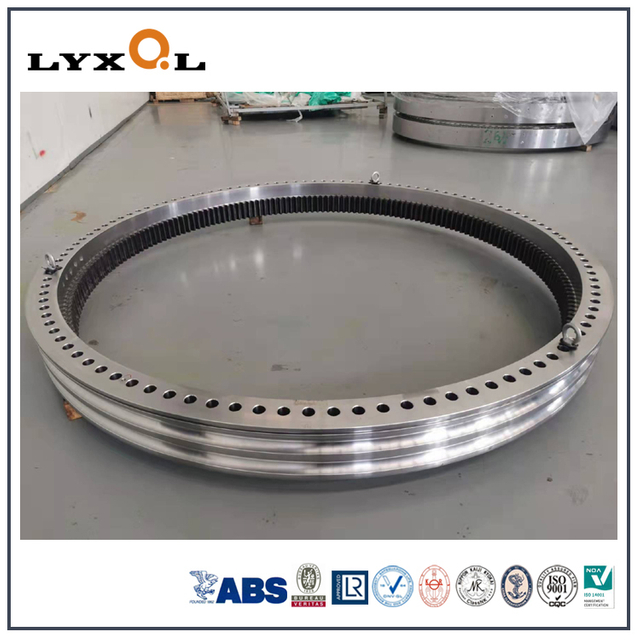
Axial load pushes directly into the bearing and increases pressure on the rolling elements, and it raises friction torque as contact forces climb. When the axial force rises, the rolling elements compress more deeply into the raceway, and this expands the resistance needed to rotate the bearing. Engineers monitor axial load carefully because it forms the largest share of NGM, the pressure term used in torque estimation. Even small increases in axial load can create noticeable changes in rotational effort.
Radial load shifts the internal contact zone sideways, and it changes how rolling elements carry stress along the raceway. This sideways force increases NH, the radial-pressure term in friction torque formulas, and it can move the bearing’s internal load path into less favorable areas. When this happens, the rolling elements experience more drag because they now work under skewed or uneven pressure. Radial load also affects lubrication film thickness, and it can raise friction if the film becomes thin.
Tilting moment acts like a lever, and it loads one side of the bearing heavily while unloading the opposite side. This uneven effect amplifies friction torque more than axial or radial loads because it concentrates stress into a small arc of rolling elements. Mk appears directly in ball and roller formulas, and it often carries the largest coefficient, making it a powerful torque multiplier. When Mk increases, the rolling elements experience higher deformation, and this raises rolling resistance sharply.
Uneven load distribution causes some rolling elements to carry far more load than others, and it forces the bearing to rotate under imbalanced stress. It can come from poor installation, distorted support structures, or unpredictable working loads. When loads concentrate on a limited region, the rolling elements in that region deform more, and they create higher friction. The table below shows how different types of uneven load affect torque.
Load Condition | Effect on Friction Torque |
Localized axial load | Higher rolling resistance in one sector |
Side-shifted radial load | Increased drag due to skewed contact |
Excessive tilting | Sharp torque spikes on the loaded arc |
Installation imbalance | Continuous uneven pressure during rotation |
Seal preload creates steady drag, and it adds friction before the bearing even carries a load. When the seal lip presses tightly against the rotating surface, it increases resistance, and the bearing needs more torque to move. Lubrication around the seal lip reduces this drag, and it helps the seal glide rather than scrape. Poor lubrication makes the seal run dry, and friction spikes quickly during rotation.
Grease controls the friction coefficient μ, and different grease types behave differently under stress. Heavy greases create thicker films, and they may raise torque at low speed. Light greases lower resistance, and they allow rolling elements to move freely. The fill ratio also matters, because too much grease causes churning, and too little grease leaves metal exposed. Engineers adjust μ to reflect how these factors change the bearing’s internal friction.
The reference data highlights three lubrication-related factors that influence friction torque strongly. Lipid filling adjusts how grease distributes inside the bearing, and high filling can trap pockets of resistance. Seal lubrication lowers drag along the seal edges, and it prevents overheating during long cycles. Seal preload affects how much force the seal applies, and high preload increases torque sharply. These factors interact, and they influence both calculated torque and real operating performance.
Start-up conditions create higher friction because grease has not yet spread evenly, and rolling elements move slowly through thicker lubrication layers. Engineers avoid torque spikes by selecting low-temperature greases, and they reduce seal preload when possible. At low speeds, the lubrication film stays uneven, and resistance rises, so it helps to warm the bearing or run a short pre-rotation cycle. These steps stabilize μ, and they keep torque predictable during early operation.
Small angular deflections distort the raceway shape, and they change how rolling elements carry load during rotation. When the mounting surface is not flat, the bearing bends slightly, and it forces certain rolling elements to carry more pressure. This increased contact stress raises friction torque, and it may cause uneven motion at low speeds. Even minor deviations, invisible to the eye, can shift torque far beyond expected values.
Bolt preload controls how tightly the bearing connects to the structure, and uneven tightening twists the rings. When one bolt pulls harder than others, the bearing loses its circular alignment, and friction increases sharply. Over-tightening compresses the raceway, and it limits how easily rolling elements roll. The bearing then resists rotation, and torque rises even when loads appear normal. Engineers use torque-controlled tightening patterns to reduce these errors.
Mounting changes internal clearance because the rings deform slightly under bolt tension and structural weight. When clearance shrinks, rolling elements press deeper into the raceway, and friction grows sharply. Too much clearance, however, allows micro-sliding, and this also increases drag. The bearing’s designed clearance does not always match the installed clearance, and engineers must account for the difference during torque calculations.
A free, non-installed bearing rotates under ideal conditions, and it experiences little resistance. Once mounted, the structure, bolts, seals, and load paths change its deformation pattern, and friction torque no longer matches the “unloaded” value. The installed system adds new stresses, and it alters how rolling elements contact the raceways. This is why torque formulas exclude non-installed friction values, since they do not reflect real-world performance.
Installation Issue | Effect on Friction Torque |
Angular deflection | Local pressure rise and torque spike |
Uneven bolt preload | Ring distortion and increased drag |
Clearance change | Higher rolling resistance or micro-slip |
Structural deformation | Shifted load path and unpredictable torque |
Power requirements rise as friction torque increases, and the formula P = Mr·ω / η helps engineers estimate how much input power the drive system must deliver. Mr represents friction torque, ω is angular velocity, and η is drive efficiency. When speed increases, the bearing demands more power, and the system must overcome both friction and mechanical losses. This equation provides a direct link between rotational speed and power consumption, and it helps size motors correctly.
The alternative formula converts power into kilowatts, and it uses rotational speed in revolutions per minute. Engineers apply P = (Mr·n) / (9.55·η) when working in standard industrial units, and it offers a simple way to match bearings to motor specifications. As n increases, required power rises sharply, and efficiency losses become more noticeable. This formula is useful for selecting motors in cranes, wind turbines, or large turntables.
Drive efficiency changes how much torque the motor must supply, and low efficiency means the system wastes energy as heat. When η drops, the required input torque increases because the system must compensate for internal losses. Speed (n) also affects torque, and high speeds amplify friction effects inside the bearing. Engineers monitor both factors, and they adjust gearbox ratios or lubrication choices to maintain stable performance.
A slewing bearing must accelerate not only itself but also the entire rotating structure. This mass creates inertia, and it requires additional torque, especially at start-up. Engineers calculate acceleration torque to ensure the motor can overcome inertia safely without overshooting or stalling. Heavy equipment, like cranes or wind turbine nacelles, needs careful analysis because inertia can exceed friction torque during rapid rotation changes.
Tip: Always add a safety margin when sizing motors, since real operating torque often rises above calculated values due to temperature shifts, lubrication changes, and structural deformation.
Accurate friction torque calculation helps engineers control performance and prevent damage. Proper load evaluation, lubrication, and installation all matter as much as the formula itself. Engineers improve accuracy through real testing and correction factors. LYXQL supports this work by offering reliable products that enhance efficiency and provide long-term value.
A: Friction torque is calculated using load-based formulas that combine axial, radial, and moment forces acting inside the Slewing Bearing.
A: Changes in lubrication, seal drag, and load distribution shift internal resistance in the Slewing Bearing.
A: Axial load, radial load, tilting moment, and lubrication all influence torque estimation.
A: Improve lubrication, correct installation errors, and verify preload settings on the slewing ring.
